|
|
The
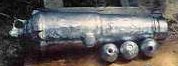
Platinum Cannon Shipwreck |
|
| Joe
Champion | David
Hudson(semi-technical lecture) | David
Hudson(made easy) | 20th
Century Alchemy(3 Chapters)
|
| The Platinum Cannon Shipwreck | The Mango Metal Report(3 chapters) | Bookstore | |
|
Scientific Findings The thrust of this investigation was to determine if any intrinsic value existed to the 40,000 pounds of gray material recovered from the ocean floor. Additional tests accomplished on drillings obtained from the cannons which were found in the proximity, proved to be of great scientific interest and economic value. Spectroscopic, Microscopic, X-ray Diffraction and General Chemistry Analyses In any study it is important to establish a baseline. Therefore following standard scientific protocol, I opted to establish the baseline by using non?invasive testing procedures. The obvious reason being from the studies completed in the past it appears that every time estranged materials (e.g. lead) are added to this matrix there is always a formation of precious metals.
Analysis of gray material pulverized to <200 mesh
There was also about .03% Zr and possibly .01% Zn. There was no sign of Hf, Pt, Au, Ag, Sn, Sb, Mo, etc but they could have been present at <100ppm and they would have escaped notice. This was obtained on a $100,000 system with very good sensitivity and excellent capabilities. We used standardless FP (fundamental parameters) to come up with these quantitative numbers with only one unknown sample. The values given above are within a factor of two of the actual values. Mark Hugo'sSpectroscopic Analysis(Mark Hugo is a Senior Engineer for the Northern States Power Company, a Professional Engineer, a member of the Electrical Power and REsearch Institure(EPRI), and has multitudes of other credits to his name) Using a X-ray Diffraction system manufactured by Texas Nuclear, Mr. Hugo reported the following: The Gray Material physically appears to have two constituents; a light tan material and darker black particles. By gravity separation, I analyzed each fraction. The tan material appears to be primarily tin with the black material being zirconium. The system was calibrated before testing and rechecked after the tests to insure its accuracy. Note: The material tested by Mr. Hugo is a split from the material analyzed by Mr. Higgin's and Mr. Little. At this time, I have no logical concept why this testing procedure varies from the norm.
Qualitative analysis utilizing a Vreeland Spectroscope showed the presence of Ca, Mg and Si as the major elements present. Iron was present and recorded as a minor element. Detection limits of this instrument is reported at 0.3%.
Microscopic and chemical analyses were completed on the gray material and drillings supplied from the cannons. Following is his determinations: GRAY MATERIAL The gray material is comprised of metallic spheres ranging from a submicron to micron in diameter. It can be said with certainty that this material underwent some type of refining or processing prior to being placed on the unknown vessel. My first thoughts were that it might be a refinement of calcium for use in the production of flexible steel for weapons such as swords. This was in high demand during the nineteenth century. However, I must state that this material was probably of some other purpose due to amount of silicon shown by the various analytical assays. Silicon associated with iron causes the steel to be brittle and the technology during the era under evaluation did not have the techniques to remove silicon from steel ores. The material rapidly effervesces in mild acids, showing the presence of significant calcium, either in the oxide or carbonate state. In a concluding statement regarding the physical observations of the gray material, it can be stated with certainty that whatever the intended use of the material was, it was not just mineral from a geological ore deposit. The material was processed (probably by man) prior to being placed in the barrels for shipment. DRILLINGS FROM CANNON Drillings from samples titled "Cannons" appeared to be a cold forged iron. The iron content was verified by various spectroscopic means prior to my review of the material.
No intrinsic value other than the presence of iron can be observed from these samples at this time. Wet Chemistry Analysis of Gray Matter - Joe Champion In an attempt to finalized the base constituents of the gray material the following test was accomplished to determine if any precious metals could be detected. The material was dissolved in aqua regia and colimetry tests were accomplished with SnC12, NH4CI, NaOH, KI, and Thiourea. With the use of the prementioned reagents, presence of Au, Pt and any of the associated platinum group metals could be detected if they were present in quantities greater than 1.0 ppm. The test was conclusive, for none of the precious metal groups were detected. This battery of tests confirms previous observations as to the lack of precious metal content within the material. Fire Assay and Extractive Metallurgical Tests of Gray Material Western Precious Metals -- Ed Horton(Mr. Ed Horton is the President of Western Precious Metals and has an excellent standing in the metallurgical field for the past 23 years) Mr. Ed Horton performed a scorification and cuppelation of 0.5 grams of the gray material. The ending result showed no detection of Au, or the platinum group metals. The purpose of such a minuscule test will be discussed later. Bill Giffin and Joe Champion A standard fire assay using scorification methods outlined by C. W. Ammen's(C.W. ammen, Recovery and Refining of Precious Metals, Van Norstand Reinhold, 1984) was accomplished. The following are the results: 1) O.Og Gray Material + 100g
assay lead => no detectable Ag As one can easily observe,
the amount of Ag produced was independent to the amount of Gray Material.
However, it is interesting to note that the "Blank Test" produced
no Ag, indicating that the Pb was indeed Ag free. Numerous analogies
could be formed from such, but at this time we will not concern ourselves
with speculations.
|
|
 Another
Mystery
Another
Mystery
|
| Joe
Champion | David
Hudson(semi-technical lecture) | David
Hudson(made easy) | 20th
Century Alchemy(3 Chapters)
|
| The Platinum Cannon Shipwreck | The Mango Metal Report(3 chapters) | Bookstore | |
|
Copyright©2014
Globe Merchant |